Concrete Floors and Loud Guitars: The Chicago Rooms That Forged The Lawrence Arms
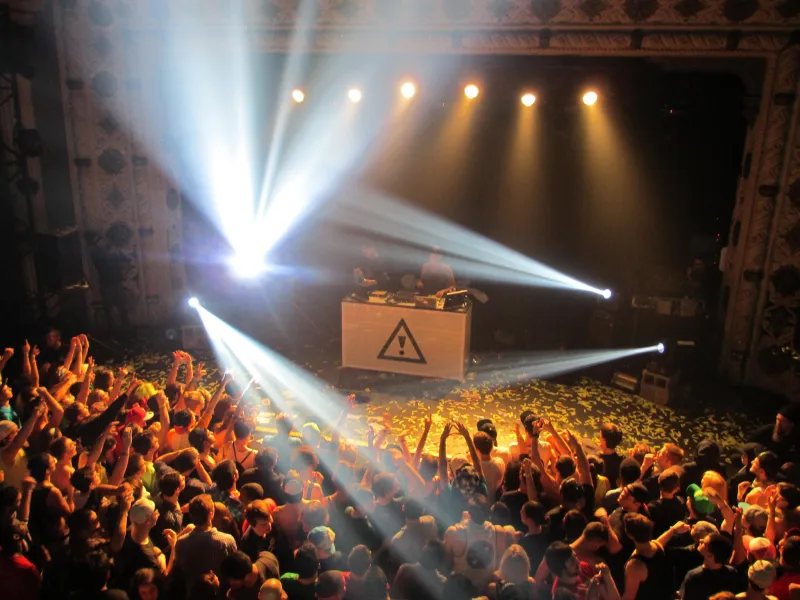
Photo: Chicago underground punk venue concert crowd small club stage, via blog.sonicbids.com
There's a certain mythology that surrounds punk bands who "make it" — the idea that success arrived fully formed, that the songs were always that sharp, that the crowd was always that devoted. For The Lawrence Arms, that mythology gets dismantled the moment you start digging into where they actually came from. The answer is unglamorous, sweaty, and almost always involves a PA system held together with duct tape. It involves Chicago.
The city's DIY infrastructure didn't just give Brendan Kelly, Chris McCaughan, and Neil Hennessy a place to play. It gave them a philosophy. And two-plus decades later, that philosophy is still running the show.
The City as Classroom
Chicago has always had a complicated relationship with the music industry's idea of what a band should be. While cities like Los Angeles and New York spent decades building scenes around industry access and major-label proximity, Chicago's punk community developed something different — a culture of self-sufficiency that treated the local venue circuit as the beginning and end of what mattered.
The Empty Bottle on Western Avenue. The Fireside Bowl, a literal bowling alley in Fullerton that became one of the most important punk venues in the country during the late '90s. Subterranean in Wicker Park. Metro on Clark Street. These weren't just stops on a tour route — they were institutions that shaped what it meant to be a working band in this city. The Lawrence Arms came up playing all of them, and the lessons were specific.
At a place like the Fireside Bowl, you learned fast that the crowd didn't owe you anything. You earned the room or you didn't. There was no industry buffer, no PR spin, no stylist. There was a stage that sat maybe two feet off the ground and a crowd of people who had heard enough bad bands to know the difference. That kind of environment either hardens a band or breaks them. For The Lawrence Arms, it did the former.
Community Over Commerce — Before It Was a Talking Point
What made Chicago's DIY scene distinct wasn't just the venues — it was the network surrounding them. Labels like Asian Man Records and Thick Records operated out of this same ethos, treating bands as collaborators rather than products. The Lawrence Arms came up in a world where the people booking the shows, running the merch tables, and writing the zine reviews were often the same people in the crowd the next night.
That kind of tight-knit ecosystem has real artistic consequences. When your audience is also your community — when the people who might call you out for selling out are standing six feet from the stage — you develop a different relationship to creative decisions. Compromise stops being a pragmatic business move and starts feeling like a personal betrayal. The Lawrence Arms absorbed that lesson early, and it never left.
Brendan Kelly has talked in interviews about the way Chicago punk culture treated authenticity not as a brand attribute but as a baseline expectation. You didn't get credit for being genuine — that was just the minimum. What you got credit for was being genuinely good. That distinction matters, and it's one that a lot of bands raised in more industry-adjacent environments never quite internalize.
The Rooms That Still Exist (And the Ones That Don't)
Not all of those spaces survived. The Fireside Bowl eventually returned to being a bowling alley before later hosting shows again in a different capacity. Venues across the country have shuttered at alarming rates over the past decade, accelerated by the pandemic and the slow economic squeeze on independent music spaces in gentrifying urban neighborhoods.
Chicago has felt that pressure hard. Rising rents in neighborhoods like Wicker Park and Logan Square — places that once incubated the city's underground music culture — have pushed both bands and venues to adapt or disappear. It's a tension that The Lawrence Arms have acknowledged openly, and it connects directly to the broader conversation about what it costs to maintain a DIY ethos in a city that keeps getting more expensive.
But the spirit hasn't died. Venues like Sleeping Village, Schubas, and the ongoing ecosystem of basement shows and house venues in Chicago's South and West Side neighborhoods continue to do the work. New bands are coming up through the same circuit, learning the same hard lessons about earning a crowd and building something real from the ground up.
What the New Generation Is Carrying Forward
Spend any time in Chicago's current punk and indie underground and you'll see the lineage clearly. Bands like Meat Wave, Dehd, and a rotating cast of acts on labels like Sooper Records are operating with the same community-first instincts that defined the scene The Lawrence Arms grew up in. They're booking their own tours, maintaining relationships with independent labels, and treating the local venue circuit as a foundation rather than a stepping stone.
That's not an accident — it's inheritance. The Lawrence Arms didn't just make records; they modeled a way of existing in music that younger Chicago bands could actually follow. When you've got a band that's been doing it their way for more than twenty years and is still selling out shows, still releasing records people care about, and still treating their audience like adults — that's a template worth studying.
The Stage Shapes the Song
There's a direct line between the rooms The Lawrence Arms played early in their career and the sound they developed. Songs built for small, loud, close-quarters shows develop a different kind of urgency than songs built for arenas or streaming playlists. The Lawrence Arms' catalog has always had that urgency — the sense that something is at stake, that the person singing means it, that the crowd is supposed to feel something real.
That quality doesn't come from a studio. It comes from years of playing concrete-floored rooms where the only thing separating you from the audience is the habit of standing in front of the speakers instead of behind them.
Chicago gave The Lawrence Arms those rooms. And those rooms gave the band everything else.
For anyone trying to understand why The Lawrence Arms sound the way they do — why the records hit the way they hit, why the live shows still carry that particular weight — the answer starts on a stage in a bowling alley on Fullerton Avenue sometime in the late '90s. It starts with a city that expected you to earn it.
They did. And they haven't stopped.