Four Hundred Capacity and Full of Life: The Radical Choice to Stay Small
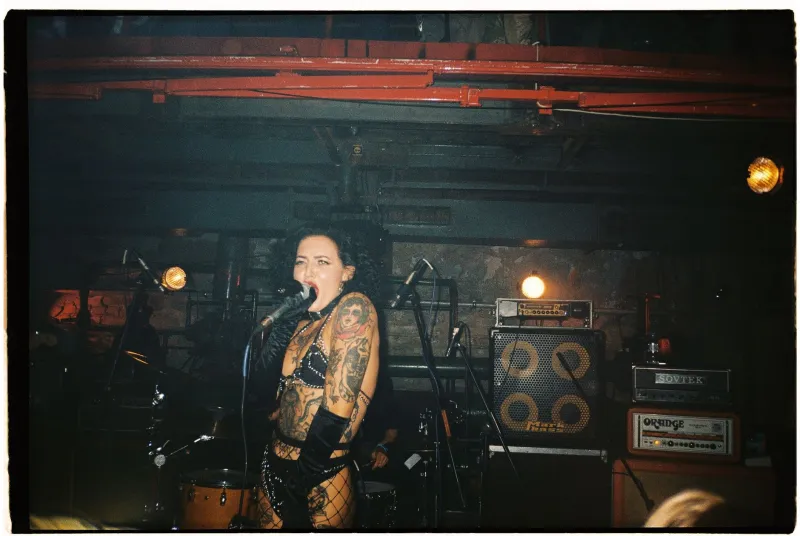
There's a particular smell to a small venue. Beer-soaked wood, decades of cigarette smoke baked into the walls even after the smoking ban, the faint electrical tang of overworked amplifiers. You know the smell. If you've been to a Lawrence Arms show at a 400-cap room in Chicago or a basement-adjacent club on the east side of any mid-size American city, that smell is basically a Pavlovian trigger at this point. Your pulse ticks up. You start scanning for where you're going to plant yourself when the set kicks off.
That experience—that specific, irreplaceable experience—is what The Lawrence Arms have spent two decades protecting. And in an era where "growth" is the only metric anyone in the music business seems to care about, that protection is a radical act.
What Punk Loses When It Goes Corporate
Let's be honest about what happens when bands scale up. The economics make sense on paper: bigger rooms, bigger guarantees, more merch sold per night. A 3,000-cap theater is a different financial universe than a 500-cap club. Nobody's blaming bands for chasing that. Bills exist. Touring is expensive. Health insurance doesn't grow on trees.
But something gets traded away in that transaction, and it's not a small thing. The distance between the stage and the back wall starts to feel like a metaphor. The lights get more elaborate. The sound gets processed and polished until the rawness that made the band worth following in the first place is smoothed into something audience-friendly and fundamentally inert. The crowd becomes an audience. The show becomes a performance. The church becomes a convention center.
Punk, specifically, loses its nerve when it goes corporate. The whole architecture of the genre—the confrontational volume, the unmediated emotion, the sense that something could go sideways at any moment—depends on proximity. On the idea that the person screaming into the mic is breathing the same recycled air you are. That the barrier between performer and crowd is mostly conceptual.
The Lawrence Arms understand this at a bone-deep level. It's not a marketing position. It's a worldview.
The Theology of the Small Room
Call it what it is: a theology. Small venues are where punk's actual values get practiced, not just preached. Accessibility—real accessibility, not the kind where a ticket costs $75 before fees—is a political statement. When The Lawrence Arms play a club that holds a few hundred people in a city that doesn't usually get punk bands worth a damn, that's not just a tour stop. It's an argument about who music is for.
The argument goes like this: music is for the kid who drove three hours from a town with no scene. It's for the 35-year-old who has a kid now and can't do the festival circuit anymore but can get a babysitter for one Tuesday night in November. It's for the person who can't afford arena prices but can scrape together $20 for a show that will matter to them for the next decade. It's not for the industry. It's not for the algorithm. It's for the room.
There's also something about the physics of a small show that can't be replicated at scale. When Brendan Kelly is three feet from the front row, every lyric lands differently. The songs about falling apart, about 3 a.m. and bad decisions and trying to build something worth keeping—those songs need a room where you can see the whites of someone's eyes when they sing them. That's not theatrical. That's just true.
Chicago as a Compass
Chicago matters here. The city has a specific relationship to small venues that shaped The Lawrence Arms from the jump. The Empty Bottle. Subterranean. Schubas. These aren't just rooms—they're institutions with their own histories, their own regulars, their own sense of what a good night looks like. Playing them isn't slumming it. It's honoring a lineage.
The DIY and near-DIY circuit that runs through Chicago and out into the rest of the Midwest is the infrastructure that made this band possible. Cheap rehearsal spaces. Promoters who book shows because they love the music. Venues where the bartender has seen every band that ever mattered come through and will tell you about it if you ask. That network doesn't sustain itself automatically. It requires bands who are willing to keep showing up, keep playing rooms that don't make financial headlines, keep treating the small show as worthy of the same energy as the big one.
The Lawrence Arms have been part of that maintenance project for a long time. That's not incidental to their story. It's central to it.
Why It Matters More in 2024 Than It Did in 2004
Here's the thing about 2024: the pressures to scale up have never been more intense or more insidious. Streaming economics have gutted the middle class of the music industry. Touring costs have exploded. The algorithmic logic of digital platforms rewards reach above everything else—the more people, the more streams, the more data points, the more the machine feeds you back to more people. It's a system that doesn't know what to do with a 400-cap punk show on a Tuesday.
Which is exactly why those shows matter so much right now. Every time a band chooses the small room over the pressure to grow, they're making a statement about what music is actually for. They're opting out of the logic that turns art into content and crowds into engagement metrics. They're saying: this thing we do is worth doing even when it doesn't scale.
The Lawrence Arms don't make that choice loudly. They don't issue manifestos about it. They just keep booking shows in rooms where you can feel the bass in your sternum and the sweat is communal and the setlist might include something you've never heard them play before because the night called for it. And in the doing of it, they remind everyone in that room why they fell in love with punk in the first place.
That's the church. The small room with the sticky floor and the too-loud PA and the bartender who's seen everything. It's still standing. And as long as The Lawrence Arms keep showing up to fill it, it always will be.