After the Last Song: The Moments That Make The Lawrence Arms More Than a Band
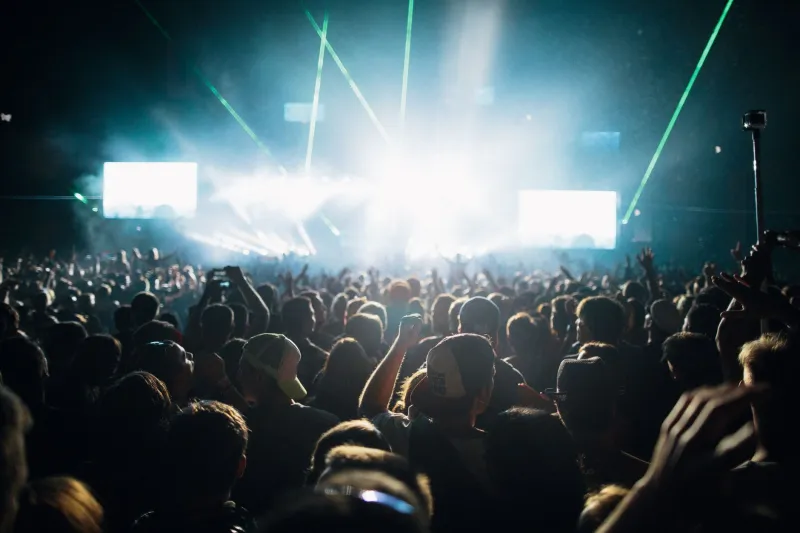
The last chord rings out. The house lights flicker on. Half the crowd is still buzzing, the other half already reaching for their phones. For most bands, that's the end of the transaction — you paid, they played, everyone goes home.
For The Lawrence Arms, it's often just the beginning of the part that matters most.
The Merch Table as Sacred Space
Anyone who's been to a Lawrence Arms show knows the particular gravitational pull of their merch table. It's not just where you buy the shirt — it's where the night continues. Brendan Kelly and Chris McCaughan have a reputation for actually being there, actually talking to people, actually remembering faces from shows they played three years ago in a different city.
This sounds like a small thing. It isn't.
In an era when artist accessibility is often a tiered purchase — VIP packages, meet-and-greet add-ons sold for triple digits — the Lawrence Arms' approach is almost radical in its simplicity. You show up. They're there. You talk. No transaction required beyond the one you already made by caring about the music.
Fans who've been to multiple shows often describe a cumulative effect: the band remembers them. Not in a vague, celebrity-gracious way, but in a specific, human way. They ask about the job you mentioned last time. They remember that you drove from Indianapolis. That kind of attention is disarming, and it creates a very particular kind of loyalty — not the parasocial kind, but the reciprocal kind. The kind that goes both ways.
Post-Show Conversations and What They Actually Mean
There's a thing that happens in the parking lot after a good Lawrence Arms show that's hard to describe to someone who hasn't experienced it. The crowd doesn't disperse immediately. People linger. Strangers talk to each other. Someone quotes a lyric and someone else finishes it. The band is often out there too, not performing accessibility but just existing in the same space as their audience.
This is community-building, but not the kind that gets written up in marketing case studies. It's the kind that happens organically when a band genuinely doesn't see a wall between themselves and the people who came to see them.
For a lot of fans, especially those who found the band during a difficult stretch — and punk tends to attract people in difficult stretches — these post-show moments have been genuinely significant. There are people who will tell you, without irony, that a conversation in a bar parking lot after a Lawrence Arms set in 2009 changed something for them. That's not hyperbole. That's what happens when artists treat their audience as full human beings rather than an aggregate demographic.
Social Media and the Art of Actually Showing Up Online
The Lawrence Arms' online presence is a minor miracle of authenticity in a landscape of carefully managed brand personas.
Brendan Kelly, in particular, has maintained a social media and newsletter presence that reads like a person and not a content strategy. His posts are funny, politically engaged, occasionally chaotic, and always recognizably himself. He argues with trolls occasionally. He posts about his kids and his neighborhood and the books he's reading. He engages with fans not as fans but as people who said something interesting.
For a generation of music consumers who have developed finely tuned radar for performed authenticity, this matters enormously. The Lawrence Arms don't have a social media team crafting their voice. The voice is just their voice. That means when they post about a new record or an upcoming tour, it doesn't feel like an announcement — it feels like a friend telling you something you'd want to know.
The comments sections on their posts are worth reading, by the way. They're full of actual conversations, callbacks to old shows, inside jokes that span years. That's not an audience. That's a community that has been building itself, post by post and show by show, for decades.
The Long Game of Giving a Damn
Here's the thing about what The Lawrence Arms have built: it took a long time and it required actually caring, consistently, without a guarantee of return.
There was no moment when they decided to be accessible and community-oriented because the data suggested it would increase ticket sales. They were just people who liked the people who liked their music, and they acted accordingly. The community that exists now — spanning multiple generations of fans, spread across the country, connected by a shared vocabulary of lyrics and shows and late-night conversations — is the cumulative result of thousands of small decisions to give a damn.
That's not replicable as a strategy. You can't reverse-engineer genuine care. But you can recognize it when you see it, and you can understand why it creates something that no algorithm-optimized fanbase can match.
What This Means for the Rest of Us
For fans, the takeaway is simple: the community you're part of is real, and it was built by people — the band and the audience equally — who chose to show up for each other.
For anyone watching from outside trying to understand why The Lawrence Arms inspire the level of devotion they do, the answer is in the parking lots and the merch tables and the DMs and the post-show bar conversations. It's in every moment after the last song where someone could have left but didn't, because something worth staying for was still happening.
The music is the reason you show up the first time. The community is the reason you keep coming back.
The Lawrence Arms built both, on purpose, for over twenty years. That's the legacy that doesn't fit on a setlist — but it might be the most important one they have.