Every Night a Different Conversation: The Art and Instinct Behind a Lawrence Arms Setlist
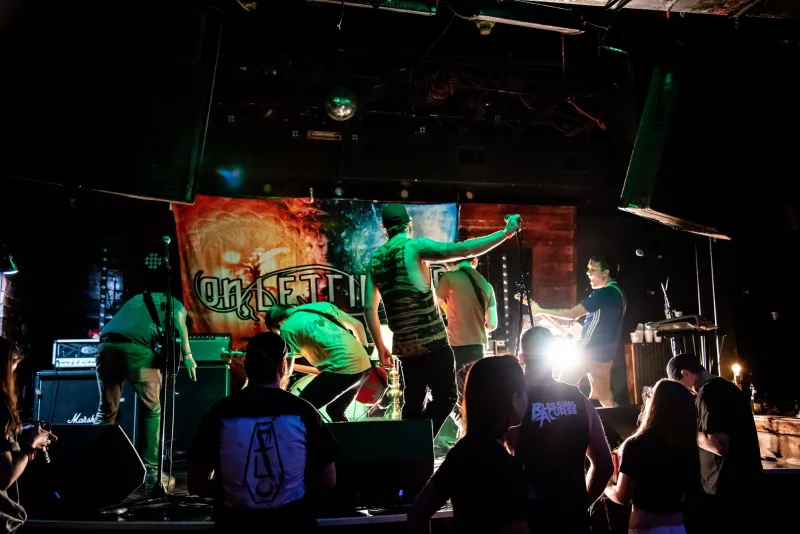
There's a moment at every Lawrence Arms show — usually somewhere between the third and fifth song — where you realize this isn't just a band running through their catalog on autopilot. Something shifts. A deep cut surfaces that you haven't heard live in years, or a fan shouts a title from the back of the room and the band actually plays it, and the whole venue kind of exhales together. That moment isn't accidental. It's the product of a philosophy about what a setlist is actually supposed to do.
For a lot of bands, the setlist is a safety net. You build it around the singles, anchor it with the album cuts everyone knows, and you get out clean. The Lawrence Arms have never really operated that way. And the more you dig into how they approach it, the more it becomes clear that their setlists function less like playlists and more like arguments — carefully constructed, emotionally loaded, and always in conversation with whoever showed up that night.
The Setlist Is Not a Checklist
Brendan Kelly has talked in various interviews and on his podcast about the way the band thinks about live performance as something that needs to breathe differently from recorded music. Songs that are dense on record sometimes need room to sprawl live. Songs that feel slight on an album can become anthems when 400 people are screaming them back at you in a room the size of a decent garage.
That tension — between what a song is and what it becomes in a live setting — is apparently a huge driver of what ends up on a given night's list. The band isn't just asking "what do people want to hear?" They're asking "what does this crowd, in this room, in this city, need to hear tonight?"
It sounds almost therapeutic when you put it that way. And honestly? It kind of is.
Geography as a Variable
Anyone who's followed the band across multiple cities on the same tour has noticed that setlists shift meaningfully from night to night. This isn't just about keeping things fresh for the band (though that's real too — playing the exact same 22 songs every night for three weeks would hollow out anybody). It's also about reading the room before you even walk into it.
A show in Chicago carries different emotional weight than a show in, say, Portland or Atlanta. The hometown crowd brings a specific kind of history with them — people who saw the band at the Empty Bottle in 2003, people who grew up on The Greatest Story Ever Told in their parents' basement, people who feel a particular kind of ownership over certain songs. The band knows this. They've talked about Chicago shows requiring a different kind of honesty, a different level of exposure, because the audience there isn't letting them get away with anything easy.
Out-of-town shows have their own logic. A city where the band doesn't play often might get a set that leans harder into the deep catalog — a kind of gift to the superfans who drove three hours because they knew this was their only shot. A festival slot where half the audience has never heard the band before might push the set toward the more immediate, more visceral songs that don't require context to land.
When the Deep Cuts Surface
One of the most electric things that can happen at a Lawrence Arms show is when something truly unexpected shows up. Not just a B-side — something that hasn't been played live in years, something that lives in the part of the catalog that only the obsessives know by heart.
These moments tend to happen for a few reasons. Sometimes a song comes up in soundcheck and just feels right — it locks in, the energy is there, and it makes the cut. Sometimes a fan interaction backstage plants a seed. Sometimes the band is just in a particular headspace and a song that seemed dormant suddenly feels necessary.
What's interesting is that these surprise appearances often generate some of the most intense reactions of the night. There's a specific kind of joy that comes from being in a room where you recognize a song in its first two seconds that most people in the building don't. It's the punk rock equivalent of an inside joke, except the punchline is a three-minute song about loss or failure or the particular exhaustion of still caring about things when caring is hard.
The Emotional Arc Is Deliberate
Setlists have structure. Even when they feel spontaneous — especially when they feel spontaneous — there's an underlying logic to how a good set moves. The Lawrence Arms are meticulous about this in ways that aren't always obvious from the floor.
A set that opens too hard and stays at the same intensity burns out the room. A set that saves everything for the end can feel like it's punishing people for showing up early. The band has talked about thinking of their sets in terms of emotional movement — peaks and valleys, moments of release and moments of tension, the slow build before a song like "Recover" hits and takes the room apart.
There's also the question of how individual songs talk to each other when placed in sequence. Certain combinations create meaning that neither song generates alone. A song about grief followed by a song about stubbornness followed by a song about community — in that order — tells a story. Rearrange them and you've got three good songs and no arc.
The Audience as Co-Author
Maybe the most honest way to describe a Lawrence Arms setlist is to say it's never entirely finished until the show is over. The band responds to what's happening in real time — the energy of the room, the requests that get shouted out, the way a particular song lands and changes the temperature of the place.
This isn't pandering. There's a difference between chasing approval and being genuinely responsive to the people in front of you. The Lawrence Arms have always seemed to understand that their fans aren't passive consumers — they're participants. The whole point of showing up is to be part of something that's built collectively in that room on that night and then it's gone.
That's why the setlist matters. Not because it determines which songs you'll hear, but because it's the framework for a conversation that only happens once. Every choice the band makes — every deep cut they surface, every sequencing decision, every moment they hold back and every moment they lean in — is a line in that conversation.
And if you've ever been in a room when it all comes together, you already know: that conversation is worth every mile you drove to get there.