The Unspoken Contract: What Makes a Lawrence Arms Show Feel Like Nothing Else on Earth
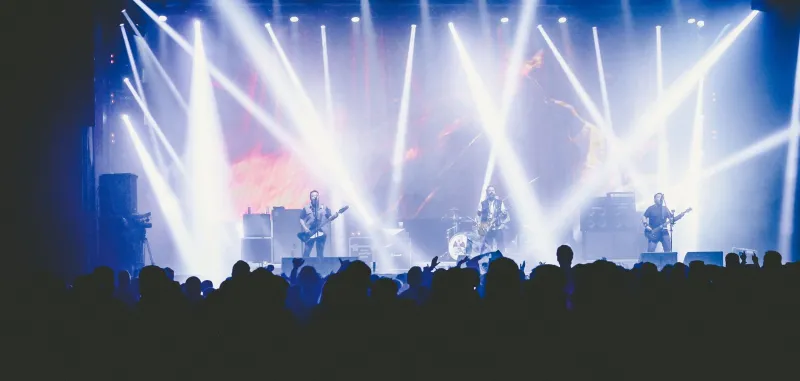
There's a moment that happens at almost every Lawrence Arms show. It's not planned. It's not in the setlist notes. It's somewhere between the second song and the fifth, when the room—whether it holds 200 people or 2,000—stops being a venue and starts being something else entirely. Call it a congregation. Call it a pressure valve. Call it the closest thing a lot of people have to church. Whatever you call it, you know it when you feel it, and you spend the next few years chasing it.
That's the thing about seeing The Lawrence Arms live. It ruins you for lesser shows.
Sweat, Feedback, and Something That Feels Like Truth
The Lawrence Arms—Brendan Kelly, Chris McCaughan, and Neil Hennessy—have been doing this long enough to know exactly what they're doing and loose enough to make it feel like they're figuring it out in real time. That tension is the whole ballgame. Longtime fans will tell you there's a deliberate chaos to their sets, a refusal to sand down the rough edges that keeps every performance feeling genuinely alive.
"It never feels like they're going through the motions," says Marcus, a fan from Milwaukee who's seen the band close to forty times since 2003. "Some bands, you can tell they've played the same set in the same order so many times it's basically muscle memory. With Lawrence Arms, even when they're playing a song I've heard a hundred times, there's something happening in the room that makes it feel new."
That's not an accident. The band has long operated with a philosophy that prioritizes the energy exchange between stage and floor over technical precision or polished presentation. Mistakes happen. Strings break. Monitors fail. None of that stops the show—it becomes part of the show. And somehow, that realness is exactly what keeps people driving three hours on a Tuesday night to stand in a sweaty room with strangers.
The Setlist as a Living Document
If you've followed the band long enough, you've noticed that their setlists aren't sacred texts. They shift. They breathe. Deep cuts surface without warning. Fan favorites get dropped when the mood calls for something rawer. Brendan and Chris have talked in various interviews about resisting the urge to build a "greatest hits" machine—the kind of set that delivers maximum nostalgia at the expense of actual feeling.
What they're after is harder to quantify. It's about reading a room and responding to it honestly. On a given night in Chicago, that might mean leaning into the older Apathy and Exhaustion material because the crowd skews toward people who grew up on it. In a college town on a Friday, it might mean going heavier, faster, louder. The setlist is a conversation, not a monologue.
"I think what separates them is that they actually give a damn about the specific room they're in," says Jess, a fan from the Twin Cities who's been following the band since The Greatest Story Ever Told dropped. "They're not just playing at you. They're playing with you. There's a difference, and most bands never figure that out."
The Ritual Elements Nobody Talks About
Every Lawrence Arms show has its rituals, even if they're never announced. The way Neil anchors the room from behind his kit—a steady, almost gravitational presence while the front of the stage churns with energy. The way Brendan and Chris trade vocal duties, their voices so distinct that switching between them feels like a shift in emotional register rather than just a change in singer. The crowd knowing every word, not as passive listeners but as active participants, filling in harmonies and screaming along with a kind of collective ownership that you don't see at most punk shows.
There's also the between-song banter—and if you've been to a show, you know this is its own art form. Brendan Kelly in particular has a gift for making a room full of people feel like they've all just stumbled into the same bar conversation, one that happens to be punctuated by three-minute bursts of melodic punk fury. It's disarming. It lowers defenses. By the time the next song hits, you're already in.
Why Bigger Rooms Haven't Changed the Equation
Here's the thing that's easy to overlook: The Lawrence Arms have played bigger stages over the years, particularly as festivals and anniversary tours have expanded their reach. And yet, the experience doesn't scale the way you'd expect. A band that started in Chicago basements and graduated through venues like the Metro and the Riviera somehow manages to make a sold-out 1,500-cap room feel as intimate as a dive bar.
Part of that is the nature of their fanbase—people who've been in the trenches with this band for years don't suddenly become passive observers just because the room got bigger. They bring the energy from those smaller shows with them. But part of it is also intentional on the band's end. There's no theatrical distance created by production value or elaborate staging. It's still three guys making a racket, and the implicit message is that the music is the point—not the spectacle around it.
"They could lean into the 'legacy band' thing more than they do," admits Tom, a Chicago-based fan who's been going to shows since the early 2000s. "Play the hits, get the applause, cash out. But they don't do that. Every show feels like they're trying to actually reach you, not just perform at you. That's rare."
The Contract, Unwritten
So what is that contract, exactly? It's not stated anywhere. There's no terms and conditions on the ticket stub. But it exists, and both sides honor it.
The band's end of the deal: show up fully, play like it matters, don't hide behind polish or pretense, and trust that the audience can handle something real. The audience's end: bring your whole self, leave the ironic distance at the door, and understand that what's happening in this room is worth your complete attention.
It sounds simple. It's actually incredibly rare. Most live music experiences ask you to be a spectator. A Lawrence Arms show asks you to be a participant. And after twenty-plus years of holding up their end of that bargain, the band has built something that no streaming algorithm and no marketing strategy can replicate—a live experience that people talk about in the past tense like they're describing something that happened to them, not something they simply attended.
That's the whole thing, really. You don't just see The Lawrence Arms. You survive them. And then you buy a ticket for the next one.