The Real Math of Staying Punk: What Independent Band Economics Actually Look Like
Let's talk about money. Not in the abstract, aspirational way that music journalism sometimes does — the vague gestures toward "sustainability" and "artistic freedom" that paper over the actual, unglamorous math of keeping a band alive. Let's talk about it the way the people actually living it have to talk about it: in real numbers, real trade-offs, and real decisions made at gas station stops somewhere on I-80 at 2 a.m.
The Lawrence Arms have been doing this for more than 25 years. No major label deal. No corporate buyout. No streaming-first pivot that traded their catalog for a check. They're still here, still touring, still putting out records on their own terms. And while that's a story about integrity and conviction, it's also a story about economics — and the economics are harder than most people want to admit.
What a Tour Actually Costs
When a punk band announces a tour, the public sees the dates and the venues. What they don't see is the spreadsheet that made those dates possible.
For a band operating at the Lawrence Arms' level — mid-size venues, 300 to 800 capacity, markets spread across the country — the per-show costs are significant. Van rental or ownership. Gas, which in 2024 means somewhere between $200 and $400 a day depending on routing and vehicle. Hotel rooms or, more often, floors and couches, because even experienced bands with real followings sometimes crash with friends to keep the math from going red. Backline rental in markets where flying makes more sense than driving. Crew costs if you're running a sound person or merch person on the road with you.
Guarantees from venues at this level run anywhere from $1,000 to $5,000 per night depending on the market, the promoter, and the deal structure. After expenses, a two-week run can net anywhere from a modest profit to an actual loss, depending on how the routing falls and how many shows sell out.
None of this is unique to the Lawrence Arms. It's the standard math of independent touring in America, and it's why most bands at this level don't tour primarily to make money. They tour to sell merch.
The Merch Table Is the Business
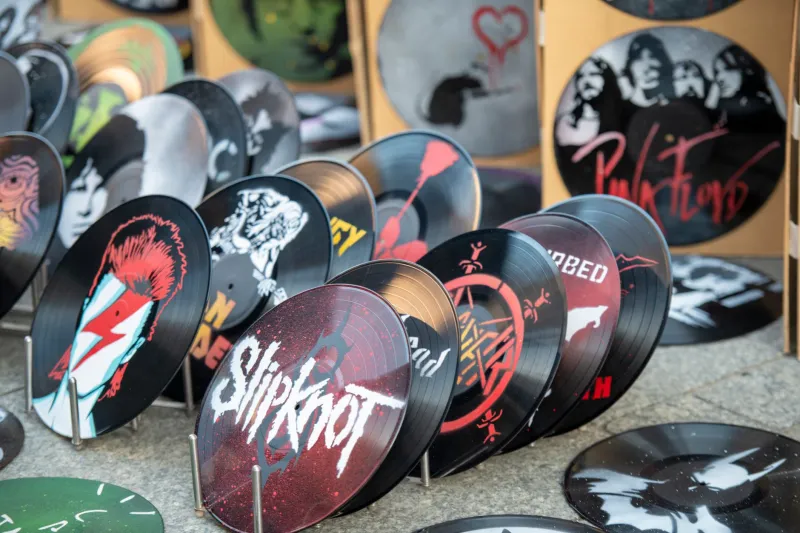
If you've ever stood at a merch table at a Lawrence Arms show, you've seen the economics in action. T-shirts, hoodies, vinyl, CDs, patches, tote bags — the table is stocked deliberately, and for good reason. Merch margins are real in a way that guarantee splits often aren't.
A t-shirt that costs $6 to produce sells for $30 at the table. A record that costs $8 to press sells for $25 to $30. At a 500-cap show where 60 percent of the room buys something — which is high, but achievable for a band with a loyal fanbase — you're looking at $3,000 to $8,000 in merch revenue from a single night. That number can make or break a tour's bottom line.
This is why the merch table isn't just a merchandise operation. It's a community touchpoint that also happens to fund the whole enterprise. When you buy a Lawrence Arms hoodie, you're not just getting a hoodie. You're buying the next tour. You're buying the next record. You're participating directly in the economic structure that keeps independent music alive.
Streaming: Real Talk
Everyone knows streaming payouts are bad. But "bad" is doing a lot of work in that sentence, and it's worth being specific.
Spotify pays somewhere between $0.003 and $0.005 per stream. Apple Music runs slightly higher, around $0.007 to $0.01. For a song to generate $1,000 in streaming revenue on Spotify, it needs somewhere between 200,000 and 333,000 streams. For context, a catalog artist with a devoted but not mainstream following might generate 50,000 to 150,000 streams per month across their entire catalog.
That's real money over time, especially when you own your masters and aren't splitting royalties with a label. But it's not "quit your day job" money on its own, and for independent artists who spent years building their catalog before streaming existed, it represents a retroactive devaluation of work that used to generate real physical sales revenue.
The Lawrence Arms' approach — maintaining catalog ownership, continuing to sell physical product through direct-to-fan channels, and treating streaming as a discovery tool rather than a primary revenue source — is about as smart a response to this landscape as exists. It doesn't fix the broken economics. But it maximizes what can be captured within them.
The Side Hustle Is Real
Here's the part that doesn't always make it into the romantic narrative of independent music: most people in punk bands at this level have other income. Teaching music. Freelance work. Day jobs that flex around tour schedules. Side projects and collaborations that generate additional revenue streams.
This isn't a failure of the model. It's a feature of a life built around creative work on your own terms. The goal was never to get rich. The goal was to make the thing sustainable enough to keep doing it, and sustainability sometimes means cobbling together multiple income streams rather than betting everything on a single one.
Kelly has been open over the years about the hustle involved in maintaining an independent band over the long haul. It's not glamorous. It requires constant attention to the economics in a way that bands with label support don't have to think about. But it also means the decisions stay yours.
Why This Model Still Works
The reason the Lawrence Arms model survives — the reason it's actually a blueprint worth studying — is that it's built on a foundation that streaming algorithms can't replicate and corporate marketing can't manufacture: genuine community loyalty.
Fans who feel a real connection to a band buy the merch. They show up to the shows. They pre-order the records. They tell their friends. They bring their kids. They drive four hours. They make the math work in ways that purely transactional relationships never could.
That's not a marketing strategy. It's the result of 25-plus years of showing up honestly, playing hard, and treating the audience like partners rather than consumers. The economics follow from that. They have to.
The math is hard. The hustle is real. But it turns out that when you build something people actually care about, the numbers find a way to work.