Small Rooms, Big Loyalty: The Lawrence Arms' Quiet Commitment to the Venues That Built Them
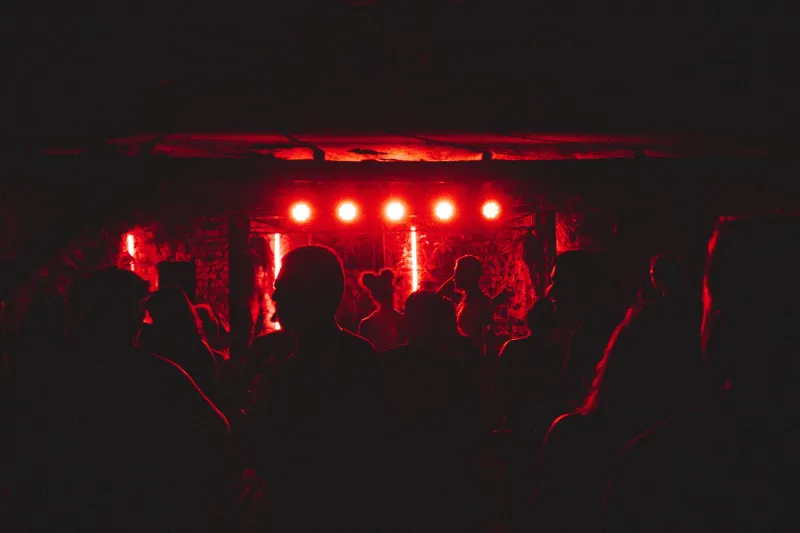
Somewhere right now, a mid-size venue in a second-tier market is struggling. The booking calendar is thin. The bar revenue barely covers the utilities. The owner is doing the math again, the same math that doesn't quite work, wondering if this is the year they finally fold.
And then The Lawrence Arms announce a run of dates, and the room sells out in forty-eight hours, and the owner breathes again for a minute.
This is not a small thing.
Festival Culture and What It Costs the Scene
The rise of the festival circuit as the dominant model for mid-level band economics has reshaped what touring looks like for a lot of acts that came up in the punk and indie world. The logic is seductive: one slot at a well-placed festival can reach more people than a two-week club run, pay better, and generate the kind of social media visibility that a Tuesday night in Columbus simply cannot.
A lot of bands have restructured their entire approach to live performance around this calculus. They play fewer shows, bigger stages, and curated festival packages where the crowd is there for the event as much as for any specific artist. The experience becomes generalized. The connection gets diluted.
The Lawrence Arms have not done this. Or rather, they've done it selectively, on their terms, without letting it become the primary grammar of how they exist as a live band. They still play the clubs. They still play the theaters that hold eight hundred people and have sticky floors and sound systems that are fine, mostly. They still show up.
What It Means to Come Back to the Same Room
There's a venue loyalty embedded in how The Lawrence Arms tour that doesn't get talked about enough. When a band returns to the same room in the same city, year after year or cycle after cycle, something accumulates. The staff knows them. The regulars know the drill. There's a shared history that lives in the walls of the place, and every time the band walks back through the door, that history gets a new chapter.
This isn't sentiment for its own sake. It's a functional community mechanism. The local promoter who's been working with the band for a decade knows how to build the night. The opener slot goes to someone from the local scene who genuinely deserves it. The people in the room aren't strangers to each other — they've been in this room before, for this band, and they recognize faces.
That's a scene. That's an actual punk community, not a consumer demographic.
Festival culture, by design, can't replicate this. The Venn diagram of people who saw The Lawrence Arms at Riot Fest and people who drove three hours to catch them at a 400-cap club in their hometown is real, but those are different experiences producing different kinds of connection. The club show is the one that changes people. The club show is the one they tell stories about.
The Scarcity Argument (That Isn't Really About Scarcity)
Some music business types, when they notice that a band like The Lawrence Arms generates intense fan loyalty without massive mainstream exposure, will reach for the word scarcity. The idea being that limited access creates demand, that not being everywhere makes people want you more.
That framing is backwards, and it misses the point entirely.
The Lawrence Arms aren't playing smaller rooms to manufacture artificial scarcity. They're playing smaller rooms because that's where the music works the way it's supposed to work. The physical proximity between the band and the crowd, the way sound moves differently in a concrete room than an amphitheater, the fact that you can see Brendan Kelly's face when he sings a line that clearly still costs him something to deliver — these are not incidental features. They are the whole point.
The devotion that follows isn't a response to limited supply. It's a response to an experience that is genuinely, structurally irreplaceable. You can't stream it. You can't get it from a highlight reel. You have to be in the room.
What This Means for the Venues Themselves
Here's the part of this conversation that matters beyond the fan experience: independent venues in this country are in a fragile, ongoing crisis. The consolidation of the live music industry under a small number of massive corporations has squeezed the mid-size and small club market from every direction — ticketing fees, booking competition, rising costs, the pandemic's lasting damage to margins.
When an established band with a devoted fanbase chooses to route their tour through independent clubs rather than chasing the most profitable or highest-profile rooms, that's not just a lifestyle choice. It's economic support for an infrastructure that the entire scene depends on. Every sold-out night at a 350-cap independent venue is money that stays in the local ecosystem — in the staff's pockets, in the promoter's operating budget, in the owner's ability to keep the lights on and keep booking the next generation of bands.
The Lawrence Arms have been part of that ecosystem for long enough to understand what it actually takes to keep it alive. Choosing to show up for those rooms, consistently, is an act of community investment that compounds over time.
The Room Is the Message
There's something The Lawrence Arms understand that a lot of bands lose sight of once a certain level of visibility becomes available: the room you play in tells people what you think of them.
A band that plays arenas is telling their audience: you are a mass. A band that plays a 500-cap club is telling their audience: you are a room. I can see you. You can see me. We are doing this together in a way that requires us to actually be in the same place at the same time.
In an era when connection is increasingly mediated, surveilled, and optimized for engagement metrics, that kind of directness is radical. Not because it's nostalgic or anti-technology, but because it insists on something real and unscalable and irreducibly human.
The Lawrence Arms keep showing up to the small rooms. The small rooms keep filling up. And in those rooms, for two hours on a weeknight in a city that might not make any headline anywhere, something happens that nobody who was there will forget.
That's the whole deal. That's always been the whole deal.