When the Gear Dies, the Show Lives: The Lawrence Arms' Greatest Technical Catastrophes and What They Left Behind
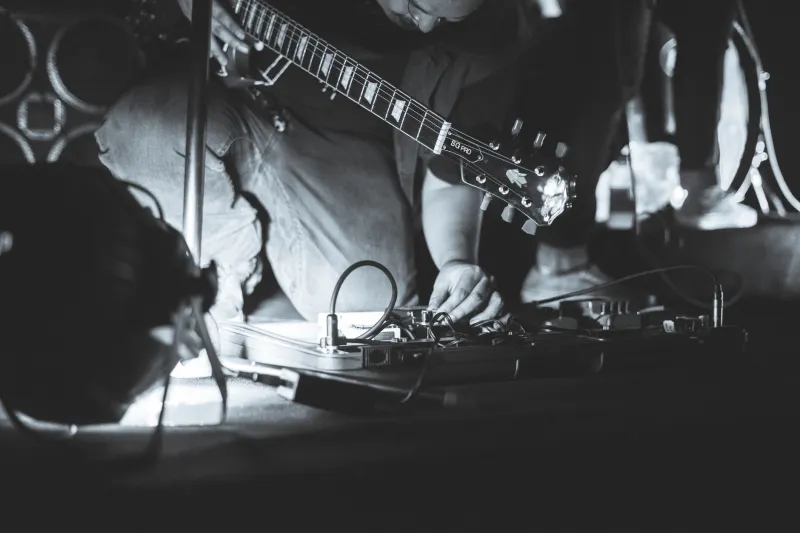
There's a certain kind of punk show that exists in a category all its own. Not the clean, well-rehearsed kind where every pedal lights up on cue and the monitors are dialed in like a recording session. No — the kind where something goes sideways in the first ten minutes, where a guitar cab starts smoking, where a drummer loses a stick mid-fill and keeps going anyway. The kind of show where the chaos becomes the point.
For fans of The Lawrence Arms, that description probably sounds less like a nightmare and more like a greatest-hits reel. Over two-plus decades of relentless touring — through basement shows in Wicker Park, sticky-floored clubs in Cleveland, and festival stages that probably had no business booking them — the band has racked up a catalog of equipment disasters that would've sent lesser acts back to the van for good. Instead, those moments became legend.
Let's talk about them.
The Amp That Gave Up in the Middle of a Set
Ask any longtime Lawrence Arms fan about a show that went off the rails and you'll get a different story every time, but certain recurring themes emerge. Amps dying mid-set might be the most common. Brendan Kelly has talked openly in interviews about playing through gear that had no business being on a stage — borrowed, beaten-up, and barely functional. The band's touring history in the early years involved the kind of equipment budgets that basically meant "whatever you can throw in the back of a hatchback and pray doesn't die before you hit the state line."
There's something almost mythological about the image of a guitarist hitting a chord and getting nothing back. Silence where there should be sound. For a lot of bands, that's a moment of visible panic — frozen looks, awkward stage banter, a roadie scrambling. For The Lawrence Arms, the response was typically something closer to a shrug and a pivot. Keep going. Figure it out. The crowd didn't pay to watch you troubleshoot.
Borrowed Guitars and Stranger Generosity
One of the more quietly beautiful things about the DIY punk circuit is the way gear gets shared. When your amp blows or your guitar goes completely out of tune mid-show — or worse, develops a short that makes every note sound like it's being filtered through a dying ceiling fan — you look to whoever's around. Opening bands, other touring acts, sometimes just a dude in the crowd who happened to bring his guitar to the show for reasons nobody questioned.
The Lawrence Arms have been on both ends of that exchange. Fans who've caught multiple shows over the years will tell you about nights where Neil Hennessy was playing with a borrowed snare or Chris McCaughan was finishing a set on someone else's instrument. And the thing is, it usually didn't matter. The songs translated. The energy translated. Because the band never treated their equipment as the source of their power — they treated it as a vehicle, and vehicles are interchangeable.
That attitude isn't accidental. It's a philosophy baked into the way they've always approached live performance. The goal was never sonic perfection. It was connection.
The Feedback Loop That Became Part of the Show
There's also the matter of feedback — that particular brand of ear-splitting, building-shaking noise that happens when a microphone or guitar pickup decides it wants to communicate directly with the PA system at maximum volume. Most sound engineers treat this as an emergency. Some bands treat it as a death sentence for the vibe.
The Lawrence Arms, on more than a few occasions, have treated it as punctuation.
Fans describe moments where what started as a technical malfunction became folded into the texture of the performance itself — held notes that turned into walls of noise, a breakdown that extended because the gear was misbehaving and the band just leaned into it. There's a difference between a band that survives feedback and a band that uses it. The Lawrence Arms have, at their best, been the latter.
What the Disasters Actually Teach You
Here's the thing that gets lost when you talk about technical failures in a purely logistical sense: those moments have a way of stripping a performance down to its skeleton. When the production falls apart, what's left is the band and the room. No safety net. No sonic polish to hide behind.
For a band whose entire identity is built on emotional rawness and unflinching honesty, that's not a crisis. That's the natural state.
Fans who've been following The Lawrence Arms since the Fat Wreck days will tell you that some of the most viscerally memorable shows they've witnessed weren't the technically flawless ones. They were the nights where something broke and the band played through it with a kind of stubborn, almost defiant energy that made the whole thing feel more real. More alive. Like the music was fighting to exist against the circumstances, which, if you've spent any time with their lyrics, is kind of the whole point.
The Gear Doesn't Make the Band
This is ultimately what separates bands who last from bands who don't. The ones who are in love with their equipment, their rider, their stage setup — they tend to crumble when any of it goes sideways. The ones who understand that the music lives in the room, in the people playing it and the people listening, those are the bands that can lose an amp at 9 PM and still deliver something worth remembering by 10.
The Lawrence Arms built their reputation on exactly that kind of resilience. Not because they planned it that way, but because the circumstances of their career — the shoestring tours, the DIY ethics, the refusal to wait for ideal conditions — demanded it. They got good at adapting because they had to. And in getting good at it, they turned a survival skill into an aesthetic.
Every blown speaker. Every snapped string. Every monitor that started humming at a frequency only dogs could fully appreciate. Those weren't setbacks. They were the show becoming more itself.
The Fans Remember Everything
Ask around in any Lawrence Arms message board or comment section and you'll find people who remember specific disasters with the kind of detail usually reserved for religious experiences. The night in [insert mid-sized Midwestern city] where the power cut out twice. The basement show where the PA was essentially a single monitor turned toward the crowd. The outdoor set where it started raining and nobody stopped playing.
Those stories aren't cautionary tales. They're badges. Proof of attendance at something that felt genuinely uncontrolled and therefore genuinely alive.
In a music landscape increasingly dominated by in-ear monitors, backing tracks, and performances engineered to sound exactly like the record, there's something almost radical about a band whose live mythology is built around the nights when everything went wrong and they played anyway. That's not an accident. That's a value system.
And it's one of the reasons, twenty-some years in, the fans are still showing up — not knowing exactly what they'll get, but knowing it'll be real.