Permission Granted: How The Lawrence Arms Quietly Rewired What Punk Fans Are Willing to Accept
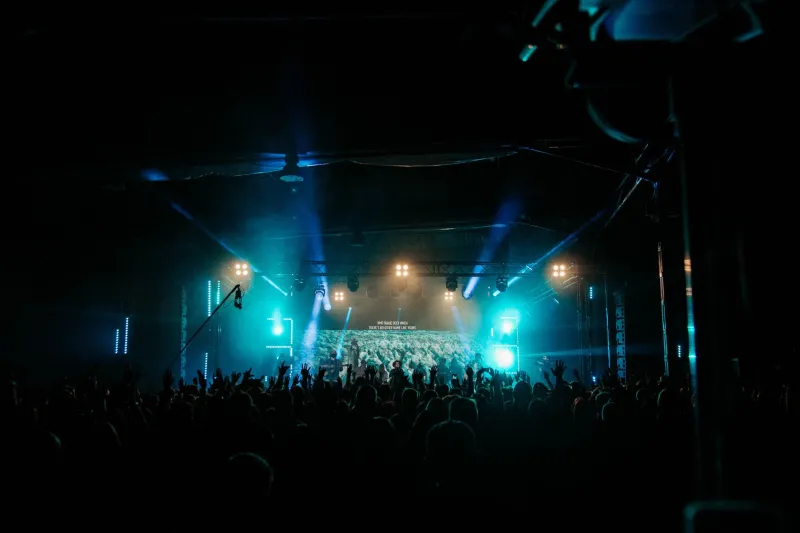
There's no press release for a cultural shift. Nobody schedules the moment a scene stops tolerating mediocrity. It just happens — slowly, then all at once — and usually, somewhere in the middle of it, there's a band that refused to blink first.
For a significant stretch of the American punk underground, that band has been The Lawrence Arms.
They never called themselves standard-bearers. Brendan Kelly and Chris McCaughan would probably laugh at the suggestion over a beer. But ask anyone who came up playing or attending shows in Chicago over the last twenty years, and the same theme keeps surfacing: The Lawrence Arms' stubborn, almost aggressive refusal to game the system gave everyone else implicit permission to do the same.
The Baseline Gets Raised
Talk to musicians who cut their teeth in Chicago's punk and indie scenes in the early 2000s, and you start to notice a pattern. The Lawrence Arms weren't just a band people admired from a distance. They were a working model — proof that you could stay weird, stay honest, and still build something that lasted.
"They made it feel like a real option," says one Chicago-based musician who asked not to be named but has shared bills with the Arms on multiple occasions. "Like, you didn't have to go the industry route. You didn't have to play the game. They were doing it differently and it was working, and that mattered more than any advice anyone ever gave me."
That working model had specific components. Smaller venues chosen deliberately over prestige rooms. Setlists that felt handpicked rather than programmed. Merch that reflected actual values rather than brand management. And a relationship with their audience that operated less like a transaction and more like a long-running conversation between people who genuinely give a damn about the same things.
For younger bands watching that unfold in real time, the message was clear: the bar isn't where the industry tells you it is. It's higher. And you're allowed to hold yourself to it.
What "Uncompromising" Actually Looks Like in Practice
It's easy to throw around words like "authentic" and "uncompromising" until they mean nothing. In The Lawrence Arms' case, those words have receipts.
There were label situations they walked away from. Touring decisions that made zero commercial sense but complete personal sense. A creative output — from The Greatest Story Ever Told through Skeleton Coast — that never chased a trend hard enough to catch one, which paradoxically is exactly why each record still sounds urgent rather than dated.
For DIY venues and promoters, this translated into something tangible. When a band of The Lawrence Arms' stature consistently chooses the 400-cap room over the 2,000-cap theater, it sends a message about what intimacy is worth. Venue operators in cities across the Midwest have quietly noted that the Arms' loyalty to specific rooms — rooms with history, rooms with character, rooms where the floor is sticky and the sound is honest — helped sustain those spaces during periods when the economics were brutal.
"They kept certain rooms alive just by coming back," one Chicago-area promoter told us. "Not because they had to. Because they wanted to. That's not nothing. That's actually everything."
Emerging Bands Taking Notes
The influence doesn't stop with venues. A new generation of punk and post-punk acts coming out of Chicago and beyond have been explicit about the Lawrence Arms blueprint in interviews and social media posts — sometimes directly, sometimes in the shape of the choices they make.
Bands that refuse to license their music to brands that contradict their politics. Bands that maintain direct communication with their fans rather than filtering everything through management-speak. Bands that put out records on their own terms, on their own timeline, without apologizing for either.
"I remember seeing them at Riot Fest and thinking, these guys are just completely themselves," says one member of a Chicago-based punk outfit currently building a regional following. "There was no performance of being a band. They just were the band. And the crowd felt it. I went home that night and had a real conversation with my bandmates about what we were actually doing and why."
That kind of reckoning — the one that happens after you watch a band operate with total integrity in front of a few thousand people who clearly feel it in their bones — is the Lawrence Arms effect in its purest form. It's not a masterclass. It's not a podcast episode. It's a lived example, repeated over decades, that accumulates into something that changes how you think about what's possible.
The Fan Side of the Equation
Here's what often gets overlooked in conversations about band influence: fans changed too.
The Lawrence Arms built an audience that expects to be treated like adults. That expects honesty, even when honesty is uncomfortable. That expects the music to mean something, the show to feel real, and the relationship between artist and listener to be mutual rather than extractive.
That audience doesn't just passively consume. They show up. They travel. They defend the music with the kind of conviction that comes from feeling genuinely seen by it. And increasingly, they hold other bands to the same standard — calling out cash-grab reunion tours, seeing through hollow social media activism, refusing to be impressed by spectacle when they know what substance actually feels like.
The Lawrence Arms didn't create that discernment in their fans. But they absolutely cultivated it, show by show, record by record, honest conversation by honest conversation.
The Longest Game
Here's the thing about playing the long game: you don't always know you're doing it while it's happening. The Lawrence Arms weren't strategizing about legacy in the back of a van somewhere outside of St. Louis in 2003. They were just trying to make the best record they could and play the best show they could and be honest about all of it.
But intention and impact aren't always the same thing. The impact, in this case, is a punk scene that holds itself to a higher standard of realness — not because someone issued a decree, but because a band from Chicago spent twenty-something years demonstrating what that standard looks like when you live it out loud.
That's not influence. That's transformation. And it happened without a single industry shortcut.
Punk's been declared dead so many times it's become a running joke. The Lawrence Arms' answer to that joke, delivered through every record and every show and every deliberate choice, has always been the same: not if you refuse to let it.