Pressed and Uncompromised: Why Owning a Lawrence Arms Record Still Means Something
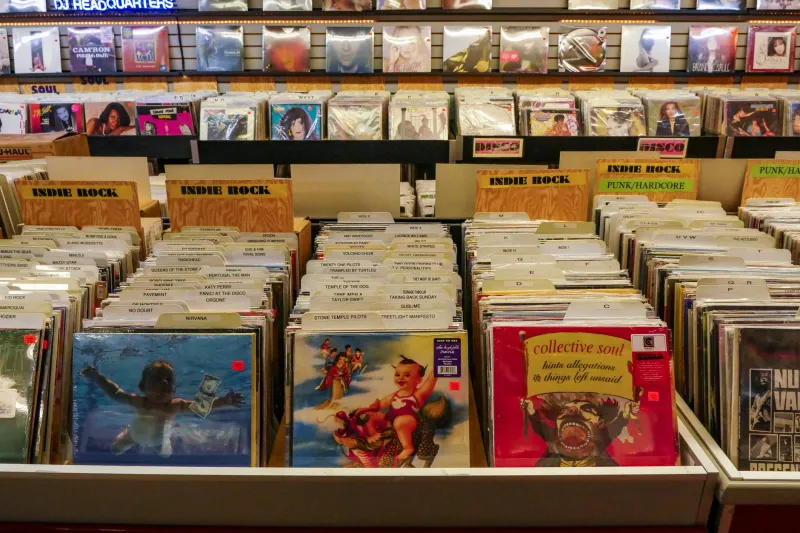
There's a specific kind of weight to a Lawrence Arms record. Not just the physical heft of 180-gram vinyl — though that's real — but the weight of what it represents. The decision to buy it. The act of pulling it from a sleeve. The ritual of sitting down and actually listening, start to finish, without a skip button in sight. In 2024, that's not a small thing. That's a countercultural act.
Streaming didn't kill music. But it did make it frictionless, and frictionless has a cost. When everything is available instantly, nothing feels particularly precious. The Lawrence Arms — Brendan Kelly, Chris McCaughan, and Neil Hennessy — have never been especially interested in precious. But they've always been deeply interested in intentional. And their ongoing commitment to physical releases, particularly vinyl, reflects exactly that.
The Convenience Trap
Let's be honest about what streaming culture asks of us: consume more, care less, move on. The algorithm rewards volume. Discovery becomes passive. You don't choose your next listen so much as you accept a suggestion. For a band whose entire identity is built on saying exactly what they mean and meaning exactly what they say, that model is a pretty terrible fit.
Vinyl demands the opposite. You have to want it. You have to find it — at a record store, at a merch table, through a distro — and then you have to take it home and give it your attention. The Lawrence Arms have leaned into that friction deliberately. Their records show up on colored pressings through Epitaph and other outlets, often in limited runs that reward the fans who are paying close attention. That's not accidental scarcity. That's a value system made physical.
"I bought Ghostoria on vinyl when it came out and I still have it," says Marcus T., a fan from Milwaukee who's been following the band since the early 2000s. "I've moved four times. That record has come with me every time. You don't do that with a Spotify playlist."
He's not wrong. There's something about ownership — real, tangible ownership — that changes your relationship to the thing you own.
What the Record Store Still Teaches You
Record Store Day has become a bit of a spectacle, sure. But the underlying impulse — that going somewhere physical to find something specific is worth doing — maps directly onto the Lawrence Arms fan experience. These are people who drive hours to catch a show in a mid-sized venue. Who wear the shirts not as fashion but as identification. Who know the difference between the studio version and the live version of "The Devil's Takin' Names" and have opinions about it.
For that community, buying the vinyl is continuous with everything else. It's showing up. It's participating in something that exists outside of an app.
"There's a record store in Wicker Park I've been going to for years," says Dani R., a Chicago-based fan. "Every time a new Lawrence Arms release comes in, I make a point of picking it up in person. It sounds corny but it feels like an event. Like I'm marking something."
Punk has always had a complicated relationship with commerce — the tension between DIY ethics and the reality of selling things is as old as the genre itself. But physical media, especially vinyl, has historically been the format that resolves that tension most honestly. You're buying something real. The exchange is transparent. The object exists in your hands.
The Ritual of the Listen
Ask Lawrence Arms fans about their listening habits and a pattern emerges pretty quickly: vinyl gets full-album treatment. No shuffle. No skips. Side A, then flip, Side B. That structure isn't accidental — it's the way the band sequenced the record, and the sequence matters.
Metropole, for instance, opens with "We Are the Champions of the World" and closes with "Seventeener (17th & 17th)." That arc — from defiant anthem to raw, searching vulnerability — lands differently when you experience it as designed. Streaming makes it easy to pull those tracks out of context. Vinyl resists that. The format enforces the intent.
"I've listened to Oh! Calcutta! on Spotify plenty," admits Ryan K., a fan from Indianapolis. "But the vinyl listen is different. I actually sit down. I'm not doing anything else. It's the only format where I actually hear the whole record as a whole record."
That kind of focused listening is increasingly rare, and it's not nothing that a band like The Lawrence Arms inspires it. Their songwriting has always rewarded close attention — the lyrical density, the way Kelly and McCaughan's vocal approaches complement and complicate each other, the dynamics that Hennessy builds and releases on the kit. None of that lands fully as background noise.
Countercultural in the Most Practical Sense
Here's the thing about the vinyl resurgence paradox: vinyl sales have been climbing for nearly two decades straight. The format that was supposed to be obsolete is now the fastest-growing physical music format in the US. And yet the major industry still treats streaming as the only metric that matters, still designs release strategies around playlist placement, still optimizes for algorithmic reward.
The Lawrence Arms exist somewhat outside that calculus. They're not chasing playlist placements or TikTok virality. They're making records, pressing them onto wax, and trusting that the people who care about the music will find it. That's not naivety — it's confidence. It's the same confidence that's kept them relevant and respected for over two decades without a major label deal or a mainstream radio hit.
In that sense, pressing vinyl in 2024 isn't a retro gesture. It's a refusal to accept the premise that music is just content. That refusal is, in the most practical sense, punk.
What You're Actually Buying
When you pick up a Lawrence Arms record — new or used, sealed or well-worn — you're buying more than audio. You're buying into a way of thinking about music. That it deserves your time. That the people who made it thought carefully about every track, every sequence, every second of silence between songs. That the relationship between band and listener is worth honoring with something more than a passive stream.
Not everyone has a turntable. Not everyone has the budget or the space. That's real, and it matters. But for the fans who do engage with the physical catalog, the experience consistently deepens their connection to the music and to the community built around it.
The Lawrence Arms aren't precious about this. They're not gatekeeping. Listen however you want. But if you ever get the chance to drop the needle on a copy of Apathy and Exhaustion or The Greatest Story Ever Told — in a quiet room, with nowhere else to be — do it. You'll understand something about this band that no algorithm can surface for you.