What the Set Tells You: Reading The Lawrence Arms Like a Diary Left Open on Stage
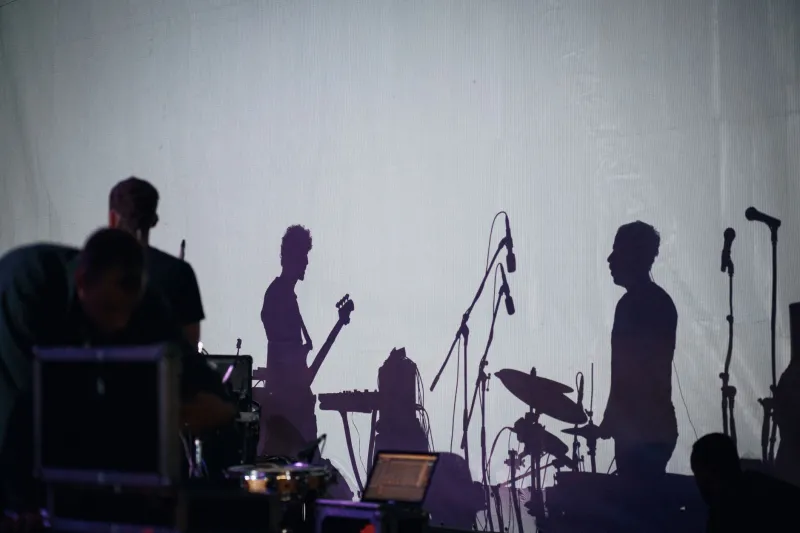
There's a moment that happens at Lawrence Arms shows—not every night, but often enough that regulars know to watch for it. Brendan Kelly leans toward Chris McCaughan, says something that's swallowed by the PA hum, and McCaughan either nods or shakes his head. Neil Hennessy reads the exchange from behind the kit, adjusts his grip, and whatever was supposed to happen next doesn't. Something else does instead.
That moment is the setlist dying in real time. And it's one of the best things about seeing this band live.
For a lot of punk acts, the setlist is infrastructure—a load-bearing wall you don't mess with mid-show. For The Lawrence Arms, it's closer to a suggestion they wrote down earlier, before they knew what kind of night it was going to be.
The List Is a Starting Point, Not a Contract
If you've been to enough Lawrence Arms shows, you've probably compared notes with someone afterward about what got played and what got cut. That conversation is practically its own tradition. The band has never been secretive about the fact that what ends up on paper before doors open isn't necessarily what gets performed. The energy in the room, the mood backstage, the weight of whatever the three of them are carrying that particular week—all of it bleeds into the actual sequence of songs in ways that are impossible to fully script.
Kelly has talked in various interviews about the idea that a show should feel like it belongs to the night it's happening on. Not to some idealized version of the tour, not to the setlist some fan posted from three cities ago. The specific Thursday in Philly. The specific Friday in Columbus. Those nights are different animals, and treating them identically would be a kind of dishonesty the band seems constitutionally unable to pull off.
McCaughan, for his part, approaches it from a songwriter's angle—which makes sense, because his instincts are deeply lyrical even when he's making real-time performance decisions. There are songs that feel right for a room that's already wound up, and songs that are better suited to a crowd that needs time to get there. Dropping one and substituting the other isn't chaos; it's attentiveness.
When the Song Choice Becomes the Story
Some nights, the swaps are minor. A closer gets shuffled up. An older deep cut replaces something from the newer record because someone in the front row is wearing a shirt from 2003 and Kelly notices. Those moments are small but they accumulate into something that feels, over the course of a set, like a genuine conversation between band and room.
Other nights, the deviation is seismic.
There are documented instances—pieced together from fan recordings, setlist.fm entries, and the kind of show-floor oral history that keeps punk communities alive—where The Lawrence Arms have essentially abandoned the planned sequence by the fourth or fifth song and rebuilt the show from instinct. Not because something went wrong technically, but because something went right emotionally, and following the original plan would have meant ignoring it.
One particularly talked-about run of dates saw the band leaning heavily into Apathy and Exhaustion-era material on nights where the crowd skewed older—fans who'd been there at the beginning, who carried that record in their bodies the way you carry the songs that got you through something specific. On those nights, pivoting toward that material wasn't nostalgia. It was recognition. The band saw who was in the room and responded accordingly.
Contrast that with shows on the same tour where the floor was full of younger faces, people who maybe came in through Metropole or We Are the Champions of the World, and the set took a completely different shape. Same band, same tour, different autobiography.
The Songs That Almost Never Make It
There's a category of Lawrence Arms songs that exist in a kind of permanent limbo—beloved by a certain stripe of fan, occasionally rehearsed, but rarely surviving contact with an actual show night. Not because they're lesser songs, but because they require a very specific atmospheric alignment to land the way they deserve.
Kelly has described certain songs as being 'mood-dependent in a way that makes them unreliable.' That's not a knock on the material. It's an acknowledgment that performance is an act of communication, and some things you only say when the conditions are right. Forcing a fragile song into a set that's running hot and loud is the punk equivalent of reading a eulogy at a keg party. Technically possible. Spiritually wrong.
This philosophy means that the most emotionally complex material in their catalog—the songs that are slower, more interior, more nakedly vulnerable—shows up when it's earned. When the room has quieted down enough to hold it. When the band is in a place where playing it won't feel like performance, but like disclosure.
That selectivity is part of what makes catching those songs live feel like something you weren't supposed to see.
Hennessy's Role in the Whole Equation
It's easy to talk about setlist decisions as if they belong exclusively to Kelly and McCaughan, since they're the ones visibly conferring at the mic stands. But Hennessy is running his own real-time calculation from behind the kit, and his read of a room is arguably the most physical of the three.
A drummer feels a crowd differently than a vocalist does. Hennessy knows when a room is locked in versus when it's starting to drift. He knows when the floor needs to get hit harder and when it needs space. His tempo and attack on any given night are as much a response to the audience as anything the front two are doing, and his instincts about what song should come next—communicated through a look, a count-in that arrives slightly before anyone expected it—are part of the band's live decision-making in ways that rarely get talked about.
The three of them have been doing this long enough that the communication is compressed to the point of near-telepathy. A raised eyebrow from Kelly. A barely perceptible nod from McCaughan. Hennessy already counting in.
Why It Matters That They Do It This Way
You could argue that a tighter, more rehearsed set would serve The Lawrence Arms better in some measurable sense. More consistent pacing. Fewer moments of visible uncertainty. A cleaner experience for someone who's never seen them before and doesn't know what they're watching when the plan gets quietly abandoned.
But that argument misses what the band is actually doing. The Lawrence Arms aren't in the business of delivering a product. They're in the business of being present in a room with people who need them to be. The setlist as autobiography isn't a metaphor—it's a methodology. Every night they play, the song selection is evidence of where they are emotionally, creatively, physically. What they're willing to say out loud. What they're not ready to say yet. What the room asked for that they didn't expect to give.
That's not a performance philosophy. That's just honesty, played loud.
And if you're paying attention—if you're watching the moment before the moment, the glance across the stage, the song that doesn't get played—you're reading the diary. You just have to know how to look.