Digging Through the Vault: What The Lawrence Arms' Rotating Catalog Tells Us About Who They're Becoming
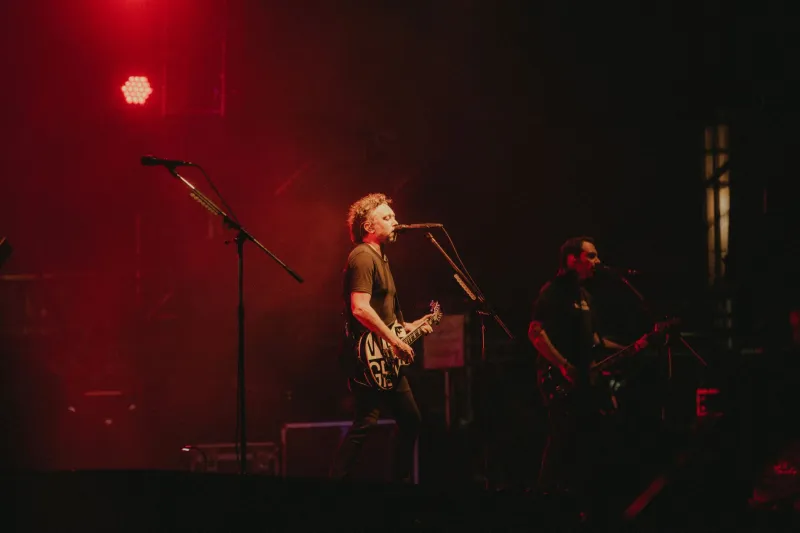
There's a certain kind of punk band that plays the same thirty songs in roughly the same order every night for twenty years. You know the type. The set is airtight, the fans know every word, and nobody's asking questions. It's comfortable. It's reliable. It's also kind of a slow death.
The Lawrence Arms are not that band.
For anyone who's tracked their setlists across tours, across decades, across the weird in-between years when the band was quiet and then suddenly wasn't—there's a pattern that emerges. Not a pattern of repetition, but of deliberate, almost surgical curation. Songs appear, disappear, come back transformed by context, and occasionally vanish entirely in ways that feel less like oversight and more like a statement. If you know how to read it, the catalog rotation is basically a running autobiography.
The Graveyard Shift: Songs That Stopped Showing Up
Every band has tracks that quietly age out of the live set. Sometimes it's logistical—a key change nobody wants to hit at 11 PM on a Tuesday in Omaha. Sometimes the song just doesn't fit the room anymore. But with The Lawrence Arms, the absences tend to feel more intentional than accidental.
Take some of the earlier Apathy and Exhaustion material. Those songs hit hard in the early 2000s, when the band was grinding through a particular kind of post-adolescent disillusionment that felt universally relatable to a specific subset of Midwest punk kids. Over time, certain tracks from that era have shown up less and less. Not because they're bad—they're not—but because there's a sense that Brendan and Chris have moved past the emotional geography those songs were mapping. Playing them every night would be like wearing a shirt from a relationship you've moved on from. You still own it. You just don't reach for it.
This isn't loss. It's growth wearing a leather jacket.
The Resurrection Files: When Old Songs Come Back Different
Here's where it gets interesting. The Lawrence Arms have a habit of pulling tracks back into rotation years after they've gone quiet—and when those songs return, they don't come back the same. The crowd's relationship to them has shifted. The band's relationship to them has shifted. And that gap between the original recording and the live performance creates this weird, resonant tension that you can feel in the room.
The Lil' Homie is a good example of a track that carries different weight depending on when and where it surfaces. So is Necrotism Defined, which has had multiple lives across different touring cycles. When these songs reappear, it's rarely random. There's usually something in the broader set that they're in conversation with—an older track paired with a newer one to create a kind of call-and-response that the audience picks up on even if they can't articulate why.
That's intentionality. That's a band treating their catalog as a resource rather than a setlist obligation.
The Anchor Tracks: What Always Stays
For all the rotation and experimentation, there are songs that have proven essentially immovable. We Are the Champions of the World, Quincentuple Your Money, The Devil's Takin' Names—these have earned permanent residence in the live set not just because the crowd demands them, but because they function as anchors. They're the fixed points around which everything else orbits.
What's worth noting about the anchor tracks is that they tend to be the songs with the most elastic emotional range. They can open a set or close it. They can follow something chaotic or something quiet. They work in a sold-out Metro show and they work in a half-full bar in the middle of nowhere. That versatility isn't accidental. These are songs built to carry weight, and the band clearly knows it.
The interesting creative move is what gets placed around the anchors. That's where you see the real editorial hand at work.
Metropole and the Pivot Point
If you want to understand the most significant shift in the Lawrence Arms' catalog rotation, you have to talk about Metropole. The 2014 record—their first in eight years at that point—didn't just add new material to the live set. It recontextualized everything around it.
Songs from Oh! Calcutta! and Ghostlike suddenly sounded different when performed alongside Beautiful Things or Seventeener (17th and 610). The newer material had a kind of weathered introspection to it that made the older songs sound less like youthful aggression and more like backstory. The set became less a greatest-hits run and more a narrative arc—here's where we started, here's what happened, here's where we landed.
That shift in how the catalog functions live is one of the more underappreciated moves in contemporary punk. Most bands treat a new record as an addition to an existing structure. The Lawrence Arms used Metropole to restructure the whole building.
The Fan Archaeology Problem
One of the things that makes tracking this stuff genuinely difficult is that The Lawrence Arms have never been a band that telegraphs their intentions. They don't do deep-dive press cycles about the meaning behind setlist choices. They don't post explainer threads. You have to go digging—through fan forums, setlist aggregator sites, bootleg recordings, and the collective memory of people who've been showing up since the Fireside Bowl days.
That DIY archaeology is actually part of the appeal. The band rewards close attention without demanding it. You can go to a show and have a great time without ever thinking about why Quincentuple hits different when it follows Boatless Booze Cruise. But if you are thinking about it, there's something there.
This is the kind of band that hides meaning in plain sight and lets you find it on your own schedule.
What the Choices Say
Strip away the individual song titles and what you're really looking at is a band that has refused to become a tribute act to its own past. The Lawrence Arms take their history seriously enough to curate it, to question it, to decide which parts of it still feel true and which parts are better left in the liner notes.
That's not nostalgia. That's accountability.
For a band operating in a scene that sometimes treats longevity as an excuse to coast, it's a genuinely radical stance. Every time they drop a track from the rotation, they're saying something. Every time they bring one back, they're saying something else. The setlist isn't just a list of songs. It's a living argument about who they are and who they're still deciding to be.
And if you're paying attention, it's one of the most honest conversations happening in punk right now.